A long, long time ago, in a certain country, lived a poor farmer’s family. They lived from hand to mouth. While the crops of other farmers in the vicinity grew well, theirs, unfortunately, were always very poor. However, every member of the family was very kind and free from greed. As a result, despite having so little wealth and often no rice in the pot, they always had smiles on their faces. They felt no envy towards their neighbors. Although they were somewhat disheartened by their own situation, they never blamed others. Their days passed in this state of hardship.
Suddenly, one night, a beggar from a foreign land came and knocked on their door. Exhausted from his long journey, the beggar asked them for a meal and shelter for one night. Without a second thought, they welcomed the guest with great warmth. The beggar was extremely pleased with such a beautiful reception. As he was leaving in the morning, he called the whole family and said,
“You are very good people. You don’t know me, yet you took such good care of me. If you wish, I can tell you a way to end your poverty. But you must promise me that even with great wealth, you will remain as kind as you are now.”
Everyone agreed in a single word.
The beggar then took out a small, plump, cuddly rabbit from his bag. Placing it before them, the beggar said,
“This is the fruit of much penance. I was told that if I cooked and ate this rabbit, I would gain great wealth and riches. But I am a beggar, what would I do with so much money? Actually, having kept it for a long time, I have grown very fond of this rabbit. I cannot do that task. I am not young anymore, and I probably won’t live much longer. You are in great need, so take this rabbit. Change your fortune. But be careful, do not grow fond of it as I did! If you do, your fortune will not change.”
Saying this, the beggar left with his bag. The farmer’s family stood there, astonished. They found it hard to believe; could such things really happen? But if their days of poverty could end, what was the harm? After much thought, it was decided that the rabbit would be cooked that very night. The farmer’s wife stayed home to cook, while her son and husband went to work in the fields. Meanwhile, the son’s wife was expecting a child, so she had been at her father’s house for quite some time. She was due to return that night and knew nothing of the beggar’s words.
After everyone had left, the farmer’s wife sat down and began to daydream. With a lot of money, they would do so many things; they would no longer have to work for food and could spend their lives with their feet up! The more she thought, the more greed grew in her heart. The ghost of avarice took possession of her mind. In time, all the kindness, compassion, and good thoughts in her mind vanished, leaving only greed. She then cut up the rabbit and put it on the stove to cook.
As evening approached, her daughter-in-law returned home. It had been a long journey, and she was very tired. A beautiful aroma of cooking was wafting from the pot. Such fine food was rarely cooked in their house, so she curiously asked her mother-in-law about it. But the mother-in-law was not the same person anymore. She snapped at her, “You just arrived and you’re already clamoring for food, daughter-in-law? Didn’t they feed you at your father’s house?” The daughter-in-law was deeply hurt by such scolding but said nothing. However, as soon as her mother-in-law stepped out of the kitchen for a moment, she, driven by hunger, took a handful of meat and ate it. The mother-in-law came back, caught her red-handed, and began to beat her. After being beaten, the daughter-in-law sat in the courtyard and cried. Just then, the farmer and his son returned home. Seeing his wife’s plight, the son, angry with his mother, left the house immediately with his wife, taking only their water pot, or ‘lota’.
Walking through the dense jungle, both became exhausted. There was no drinking water to be found anywhere, let alone food. They survived somehow by eating wild creepers and leaves. In the midst of this hardship, they had a son. A small baby, a new mother—yet there was no water to drink! In his despair, the farmer’s son climbed a very tall tree to see if there was any source of water nearby. His eyes then fell upon a clear lake some distance away. No sooner thought than done. Taking the lota, he ran towards the lake. After drinking water there and filling the lota, he felt the urge to bathe. He had walked so far, and it was very hot. But he did not know that a giant dragon named U Yak Jakor lived in that lake. The moment he stepped into the water, the dragon came and devoured him.
Before coming to the lake, the farmer’s son had left several markers by tearing his dhoti and placing the pieces in the bushes. When he did not return for a long time, his wife, carrying the baby, followed the markers. She arrived to find her husband’s lota placed near the lake. The dragon, smelling a human, was peeking out from the edge of the lake again. From a distance, the farmer’s wife thought it was a person. She asked him, “Have you seen anyone pass this way?” The dragon was deceitful. “Yes,” it said. “A man did come. The king of the water has taken him. Do you want to go to him?” Moving a little closer and observing its demeanor, the farmer’s wife realized it was a wicked dragon. It must have eaten her husband. She knew, however, that the dragon could not survive on dry land. Its entire kingdom was in the water. Taking her baby and the water pot, the farmer’s wife returned to the jungle. Grieving for her husband and her home, she fell to the ground and wept. She cried so loudly that the birds in the trees flew away. And the newborn baby beside her also began to cry at the top of its lungs. The farmer’s wife was astonished to see that her son’s tears were falling as gold. Each teardrop was a piece of gold. She then remembered the story of the beggar’s rabbit that her husband had told her. Could it be that she had eaten the meat of that very rabbit that day? She put two and two together. In this vast, shoreless ocean of despair, the farmer’s wife could now grasp at a couple of straws of hope. Taking her son and gathering the gold pieces, she began to walk towards a village where people lived. After walking for many miles, she found a village. She went to the village chief and told him everything. Seeing that she had so much gold, the chief allowed her to stay in the village. A new life began for the farmer’s wife and her son in a new village.
The mother and son were living well. As the boy, U Babam Doh, grew older, his mother became more fearful—lest someone see her son’s tears! That’s why she always warned U Babam Doh not to cry in front of anyone. In truth, Babam’s mother had little greed; she did not want to become rich from the gold that fell from her son’s tears and was content with what little she had. She raised her son with love and affection.
U Babam’s friend was the prince of that kingdom. He would often visit the royal palace with his friend and learn various etiquettes. Once, the prince invited him to gamble at the Duwali festival (a Hindu festival of gambling). Without knowing anything about the game, U Babam somehow kept winning every time. Seeing him win repeatedly, the prince became angry and kept increasing the bet in the game, hoping U Babam would get scared and back out. But the opposite happened. U Babam’s luck was so good that the prince lost all his wealth in the gamble, and in the end, even his throne to U Babam. The prince, seeing no other way, started to abuse U Babam in front of everyone present, “Are you using black magic? You must be the son of the Jakor dragon.” U Babam, knowing nothing about his father, humbly accepted all their words. Later, hoping for justice, he went to the royal court. There, he explained everything about the game’s bets and his victory. But with no proof, everyone in the court sided with the prince. U Babam was then given a few days and an order was declared: “Bring sufficient proof within these few days, or face impalement!”
Ashamed and humiliated, U Babam left the court. He went home and told his mother to lay a large mat on the floor. Lying on that mat, U Babam poured out all his sorrow, and each of his teardrops fell onto the mat as a piece of gold. His mother had never seen so much gold in her life, yet she could not be happy at her son’s sorrow. After her son stopped crying, his mother told him the whole story from long ago—the story of his father’s disappearance, the water pot, and the dragon. She didn’t leave out the tale of the foreign beggar. Hearing everything, the brave U Babam wiped his tears, stood up, and promised his mother, “No matter what, I will kill that dragon—U Yak Jakor. I must take revenge for my father’s murder!” With these words, he set out for the dragon’s home.
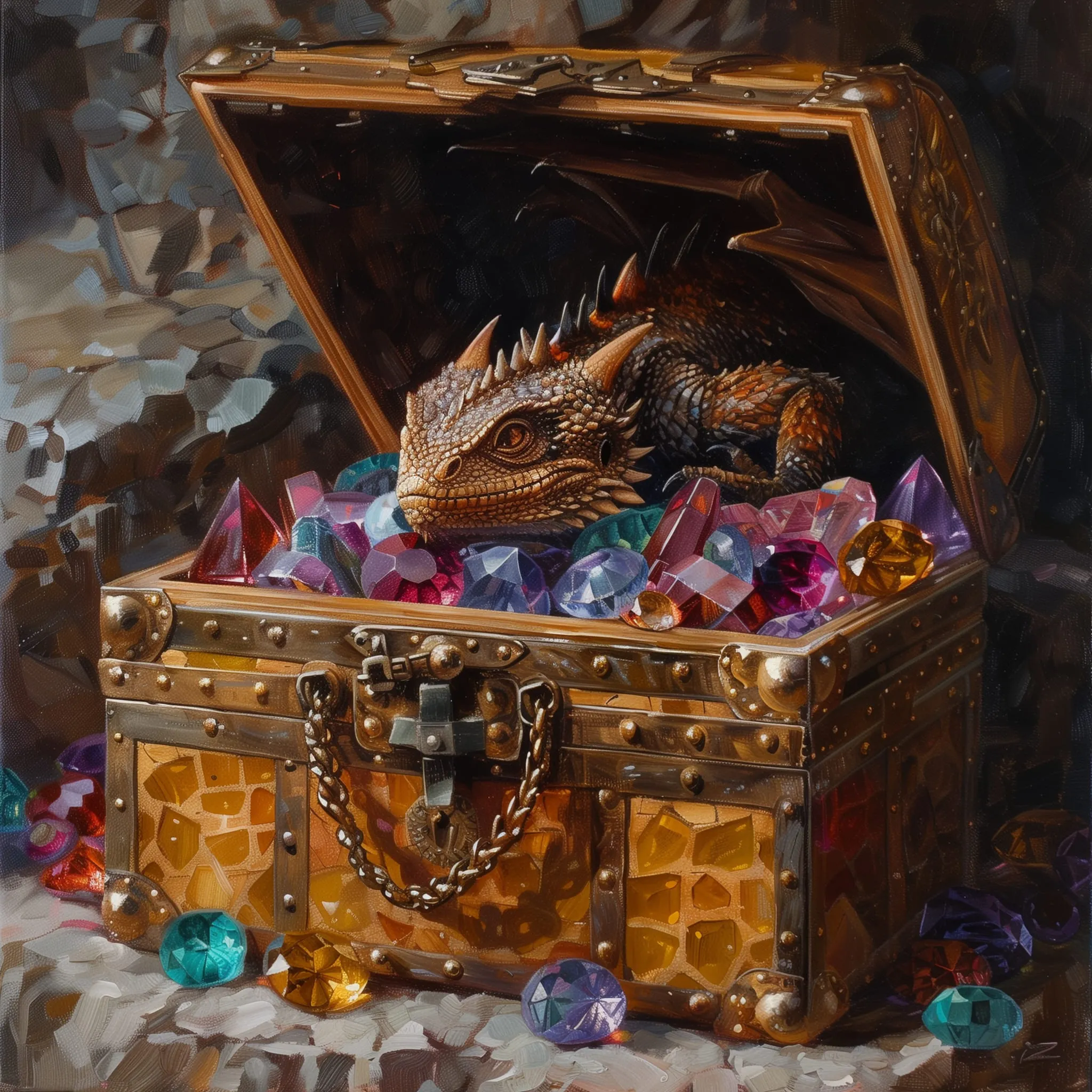
In front of the lake, he saw a huge wooden chest. Inside the chest were a princess’s silk dress and priceless jewels. Taking out the dress and jewels, U Babam started making various noises, hoping to attract any lost traveler or the dragon itself. The dragon was underwater, and hearing the noise, it thought U Babam might enter the water. But no, following his mother’s words, he stayed on the dry land above the water. For he knew that out of the water, the dragon could do nothing to him. The dragon, becoming impatient, finally raised its head above the water. U Babam was lying in wait. The moment the dragon raised its head, he pulled it out and stuffed it into the wooden chest. Now, with the priceless dress, jewels, and the dragon-filled chest, U Babam headed back towards the village. Meanwhile, in the village, everyone started whispering that U Babam had succeeded in his quest! He had brought back proof. But U Babam didn’t reveal anything so quickly, not even to his mother. Giving the dress and jewels to his mother, he warned her very carefully not to open the chest’s lid under any circumstances. But his mother’s curiosity remained. The moment U Babam stepped outside, she lifted the lid to see what was inside! The dragon, of course, knew everything. It then took on the form of her dead husband, U Babam’s father. Opening the lid and finding her lost husband, U Babam’s mother was overjoyed.
The dragon, disguised as her husband, then began to deceive the farmer’s wife. He told her that if she wanted to save him from Jakor’s clutches, her son must bring three rare items. U Babam’s mother then started lying to her son to save her husband from the dragon. She pretended to be ill and, calling her son, told him to fetch the items the dragon had specified—“This illness of mine is no ordinary illness, my son! Can you go to the jungle and bring back medicine for me?” U Babam was an obedient son. How could he refuse his mother’s words? He immediately took his mother’s blessing and set out on the quest.
Those items were a tiger’s milk, a bear’s fresh blood, and a python’s wet skin.
One by one, U Babam went to the forest to fetch each rare item. He returned with everything, one by one, but his mother’s illness did not get better. How could it? A fake illness can never be cured! However, U Babam was very surprised by his mother’s strange behavior and, hearing from a tiger cub in the forest, he began to spy on his mother. He had met this cub while fetching the tiger’s milk. The cub told him, “U Babam, your mother has no illness. When you are not at home, only fine food is cooked at your house. I can smell it even from the jungle!” U Babam became worried. Keeping an eye on his mother, he learned that she was actually completely healthy and cooked a feast of many dishes for someone every day. One day, from hiding, he saw the dragon lying in the chest in the form of his father. He then understood everything.
U Babam could not take this deception any longer. In a fit of rage, he entered the house and explained everything to his mother. His mother then realized her mistake. U Babam then took the chest and went to the royal palace, where he would be impaled if he did not bring proof. Going to the king, U Babam recounted the story of his birth, his father’s disappearance, the dragon’s attack, and his mother’s escape with him—all in detail. And finally, as proof, he brought out the dragon’s chest. In front of the crowded court, he killed the cruel dragon named U Yak Jakor with a single stroke of his sword. Everyone cheered his name. The king then, as per the terms of the bet, chose U Babam Doh as his successor. For many years after that, U Babam ruled that kingdom and cherished his subjects.