There was once a kingdom ruled by a wise King who had a single son. The Prince lived a life of ease, studying various arts, enjoying the company of his friends, and hunting in the royal forests. In this way, his days passed without a care.
As the years went by, the King grew old and found it difficult to manage the affairs of the state. He began to hand over the responsibilities of the kingdom to his son, hoping to see for himself how the Prince would rule while he was still alive. The Prince took charge, but it wasn’t long before problems began to surface. The kingdom was not being managed well , and day by day, the royal treasury started to empty.
One day, the old King fell terribly ill. His condition worsened quickly, and a shadow of grief fell over the palace. Everyone feared the King would not survive. His ministers, friends, and the Prince gathered around his bedside, their eyes filled with tears. Despite countless prayers, rituals, and the best efforts of physicians, nothing could be done. The King’s final moments were near. With his last ounce of strength, the dying King lifted his head and took his son’s hand. “My son, I am leaving,” he whispered, his voice frail. “But I cannot go in peace, for I have not seen you become a worthy king. The path you are on will not sustain the kingdom. Listen closely. I will give you four pieces of advice. If you can follow them, you will become a true man, and your rule will be strong and enduring.”
The King paused, struggling for breath. “Listen,” he continued, “here are the four rules:
- First, with every morsel of food you eat, consume the head of a fish.
- Second, lend money, but do not take it back.
- Third, keep your subjects under constant, strict rule.
- And fourth, seek counsel from the three-legged, three-headed one. Promise me you will do this.”
With those words, the King’s head fell back onto the pillow. He spoke no more and passed away into the heavens.
The First Riddle: The Head of the Fish After a period of mourning, the Prince officially became King. He resolved to govern according to his father’s final instructions. He held court with his friends and newly appointed ministers and began to implement the first piece of advice. He commanded the royal fishermen to supply two hundred large fish to the palace every single day. He declared that he would eat only the heads of these fish with his rice, ensuring not a single bite was without a fish head.
His ministers and advisors were overjoyed. “A brilliant decision, Your Majesty!” they cheered. “This is exactly what a true king should do! We are proud to serve you! Long live the King!”.
So, the fishermen toiled day and night to provide two hundred large Rohu or Katla fish. The young King ate the two hundred fish heads daily , while his ministers happily divided the rest of the fish among themselves. Day after day, this continued, until large fish became scarce in the kingdom’s waters. The palace had to import fish from faraway lands, and the expense began to drain the royal treasury. To make matters worse, from eating so many rich fish heads every day, the King fell dreadfully ill. Frustrated and unwell, he finally gave up the practice.
The Second Riddle: The Open Treasury The King then decided he must have failed because he wasn’t following the second piece of advice. He immediately summoned his people and announced that the royal treasury was open to all. Anyone who needed money could borrow as much as they wanted, and he would never ask for it back. People flocked to the palace, taking bags of gold and coins. The treasury, once full, was quickly reduced to a quarter of its wealth, and still, the King gave more away. His ministers were ecstatic. “What a glorious reign!” they whispered among themselves, taking sacks of money for their own. “We will never have to repay this!”.
The honest citizens of the kingdom, however, were confused. They came at the proper time to repay their loans, but the King refused them. “I cannot accept this,” he said. “It is not my rule to take back money I have lent.”. They left, bewildered, as the King continued to give away the kingdom’s wealth until the treasury was completely empty.
The Third Riddle: The Iron Fist Sitting alone, the King grew desperate. “Perhaps this is happening because I have not followed my father’s third instruction,” he thought. He immediately issued a decree: “For too long, the people have been without discipline! From this day forward, all subjects must be kept under the strictest rule!”.
His guards and officers, excited by this new power, swarmed out into the kingdom. They arrested people on the spot, binding them and beating them with canes and fists. “You lazy dogs have had it too easy!” they shouted. The ministers cheered this new approach. “Yes! This is how a kingdom should be run! What is the point of being a ruler if you cannot discipline your subjects?”.
The brutal and unjust “discipline” was reported to the King three times a day. “Excellent,” the King would say. “Ensure no one escapes this rule.”. Faced with this tyranny, the people began to abandon their homes. Soon, entire villages were empty as citizens fled to other lands to escape the cruelty. The King rode out one day to find his kingdom silent and deserted.
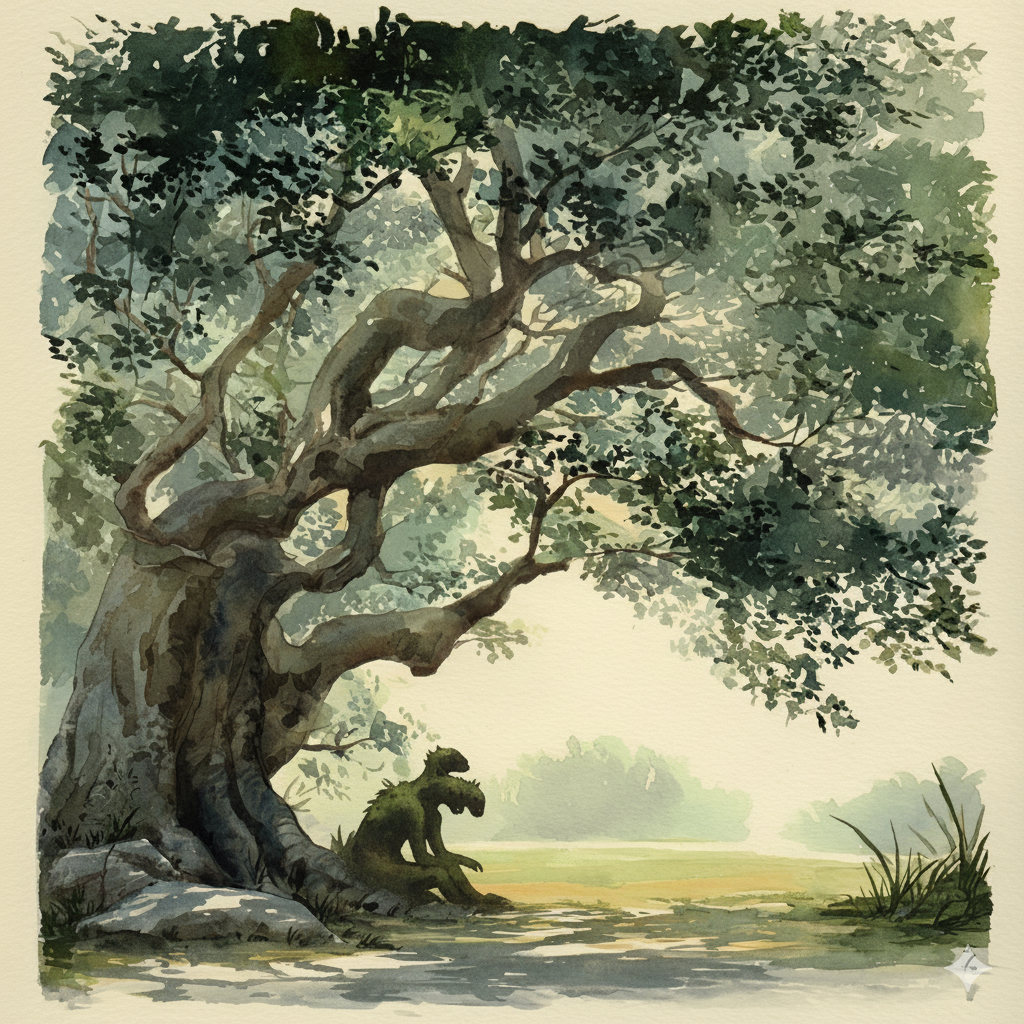
The Fourth Riddle: The Three-Legged, Three-Headed One Heartbroken, the King sat beneath a tree. It was then that he remembered his father’s fourth and final piece of advice, which he had not yet followed. He returned to his empty palace and commanded his few remaining men, “Go out in every direction and do not return until you have found the three-legged, three-headed one!”. His men searched for seven days but returned empty-handed. “Your Majesty, we found no people, let alone a creature like that,” they reported. The King gave them seven more days, ordering them to search beyond the kingdom’s borders. The quest became a joke among the lazy ministers, who laughed at the King’s folly behind his back. Meanwhile, the King’s men searched desperately.
- The group that went east found a three-legged fox and triumphantly captured it.
- The group that went west cornered a three-legged cat in an alley and caught it.
- The group that went south discovered a three-legged horse in a field and joyfully rode it back.
- The group that went north found a three-legged donkey and, after much struggle, dragged it home.
Within the week, all four groups returned to the palace with their three-legged animals, explaining that a three-headed creature could not be found anywhere. The King, though puzzled, ordered the animals to be treated with honor and placed upon the royal throne, which was covered in velvet for the occasion. He and the Queen stood before them with folded hands. “O great three-legged ones,” the King pleaded, “we do not know your powers, but we are in great peril. We seek your wisdom to save us.”.
The animals, terrified by the crowd, created chaos. The cat meowed, the fox tried to flee, the horse reared wildly, and the donkey kicked, sending the throne crashing to the floor. The ministers screamed and scrambled over each other to escape the pandemonium. The King watched in despair. No wisdom was found that day.
The Shuk Pakhi’s Wisdom and the Journey Days passed in confusion. In the palace lived an old Shuk Pakhi that had belonged to the King’s father, though it rarely spoke. One morning, it called out to the King and Queen. “I do not understand what you are trying to do,” the Shuk Pakhi said. “But I am certain you have misunderstood the old King’s words. My lord, you must leave this place. Go and travel the world.”.
The Shuk Pakhi’s words struck the King. He decided then and there to embark on a journey. The Queen and their children asked to join him, and together, they set out. They traveled from one country to another, and one day, they came upon a wide river with a strong current. As they walked along its bank, the King spotted a strange figure in the distance. It appeared to have three legs. He ordered his entourage to halt. They watched as the figure came to rest under an ancient banyan tree. As it sat, it became clear that it also had three heads.
“At last!” the King cried out in joy. “We have found the three-legged, three-headed one!”.
They rushed toward the tree, only to find a very old man sitting there. He was so frail that he leaned on a staff, which looked like a third leg. When he sat, his two knees rose up high on either side of his head, giving him the appearance of having three heads. “Oh,” the King said, disappointed. “It is only a man.”.
The old man looked up with gentle eyes. “What were you expecting, Your Majesty?” he asked softly. The King was stunned that this stranger knew who he was. The wise man gestured for him to sit. The King and Queen sat before him, and the old man listened patiently as the King recounted all his failures.
“I understand everything,” the old man said when he had finished. “You have followed your father’s words, but you have not understood their meaning.”.
The King leaned in, ready to finally understand. The wise man explained the four riddles:
“With every morsel, consume the head.” This did not mean eating the heads of large, expensive fish. It meant a king should live humbly. If you ate small, common fish, you could eat the entire thing, head included, with every bite. This teaches frugality. A king who is satisfied with little ensures the royal treasury remains full for the welfare of his people, not for his own luxury.
“Lend money, but do not take it back.” This was not an instruction to give away the kingdom’s wealth. It was advice on how to lend wisely. When you lend money, you should always take something of equal value as collateral. That way, you should expect not to get the money back, because if the borrower defaults, you still have the collateral, and your wealth is not lost. In this way, capital is preserved and can even grow.
“Keep your subjects under constant, strict rule.” This did not mean tyranny and violence. True “rule” means just governance. A king must ensure his people are happy, peaceful, educated, and safe from injustice. He must honor the talented and care for the poor. This is the kind of rule that earns a king the love and blessings of his subjects, making the kingdom strong.
“Seek counsel from the three-legged, three-headed one.” This was not a mythical beast, but a symbol for a wise elder. “Look at me,” the old man said, pointing to his staff. “I am old. I cannot walk without this third leg. And my old knees rise up like two other heads. Old people like me have seen and heard much in our long lives. Your father meant that you should not act on your own limited experience but seek the wisdom of those who are older and have lived through more.”.
The King’s eyes filled with tears of understanding. He felt as if a veil had been lifted. He and the Queen bowed deeply to the old man, their hearts full of gratitude, and returned to their kingdom.
When word spread that the King had returned, his corrupt ministers panicked. The King, now decisive and wise, ordered the sycophants and flatterers to be removed from their positions. He sent messages of amnesty to all the subjects who had fled, inviting them back with promises of safety and justice. He provided food and housing for the poor and honored the skilled people of his land.
Ruling with the wisdom he had gained, the King restored his kingdom. The treasury filled with wealth, the fields filled with crops, and the homes filled with light and laughter. He governed by listening to the counsel of elders while working with the energy of the young. His father’s final wish came true: the kingdom became strong and prosperous, and the King reigned with joy and peace for all his days.